


Burning plants is not a utilitarian gesture.
It's not about the smell, nor about the immediate effect.
It is an ancient gesture, repeated before language was fixed in words.
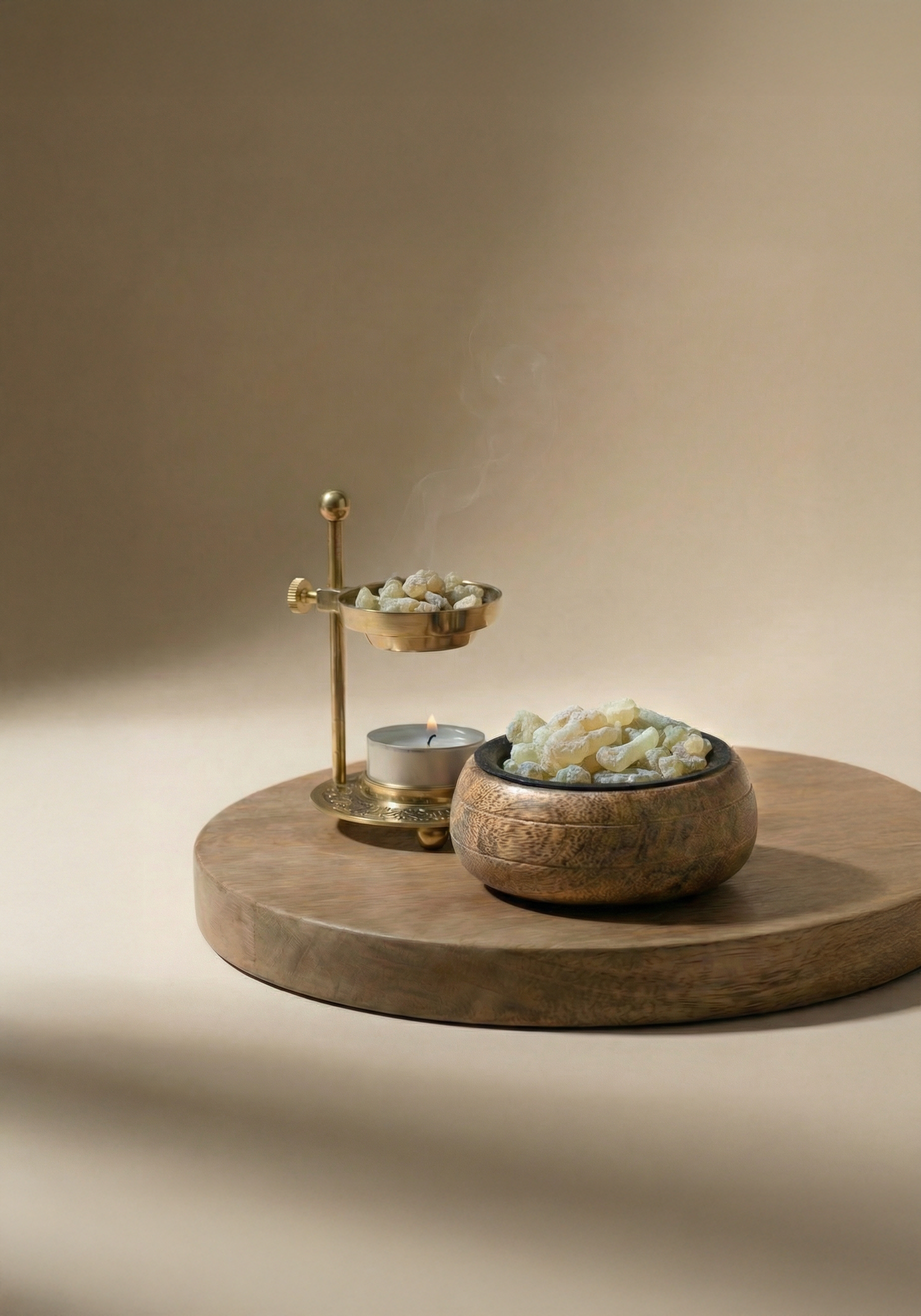
When a plant is burned, it doesn't disappear.
It transforms.
Matter becomes air, and air becomes presence.
In many cultures, the burning of resins and plants was not intended to "change" anything, but to mark a threshold : between day and night, between inside and outside, between what was and what is to be. The smoke did not rush anything. It rose slowly, giving things time to settle.
Today, the gesture has been reduced to function.
We light up for the effect, for the result, for the promise.
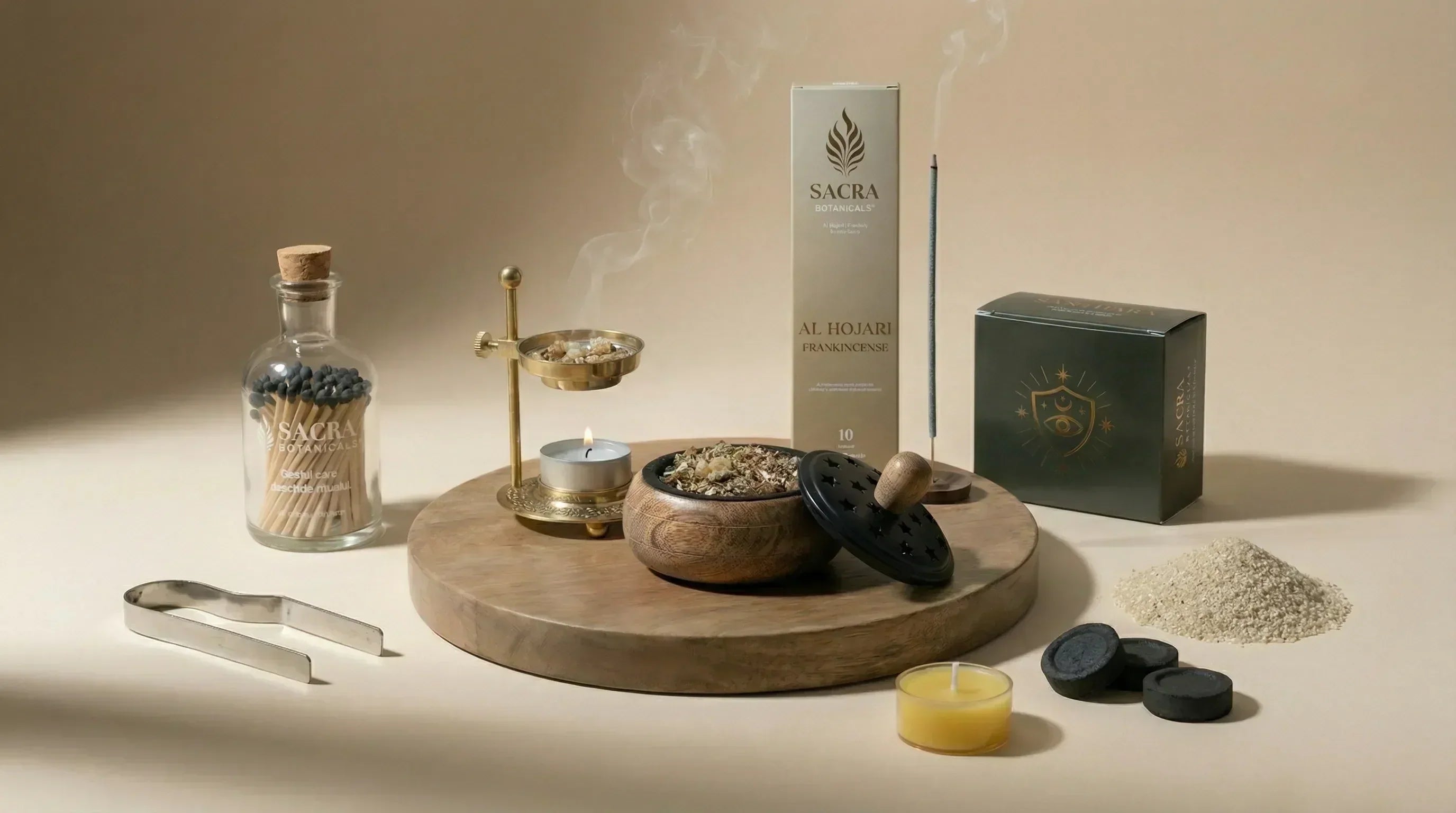
The Sacra Botanicals journal stops before this rush.
Here, burning is viewed as an act of presence.
A way to slow down space.
A way to introduce rhythm where everything tends to be uniform.
Plants do not work in an emergency.
Resins do not open instantly.
The aroma needs time to unfold and silence to be perceived.
That is why the texts in this Journal do not over-explain or provide quick instructions. They accompany. They put into words what usually remains unspoken around a ritual gesture.
We write about burning, not as a technical act, but as a form of dialogue: between plant and space, between time and attention, between exterior and interior.
We are not looking for novelty.
We don't track frequency.
We write when something arises that demands to be put down.
The diary is a continuation of the ritual, not an explanation of it.
A place where aroma, silence and words can coexist, without canceling each other out.


Share:
Boswellia Sacra Incense and the Unhurried Gesture